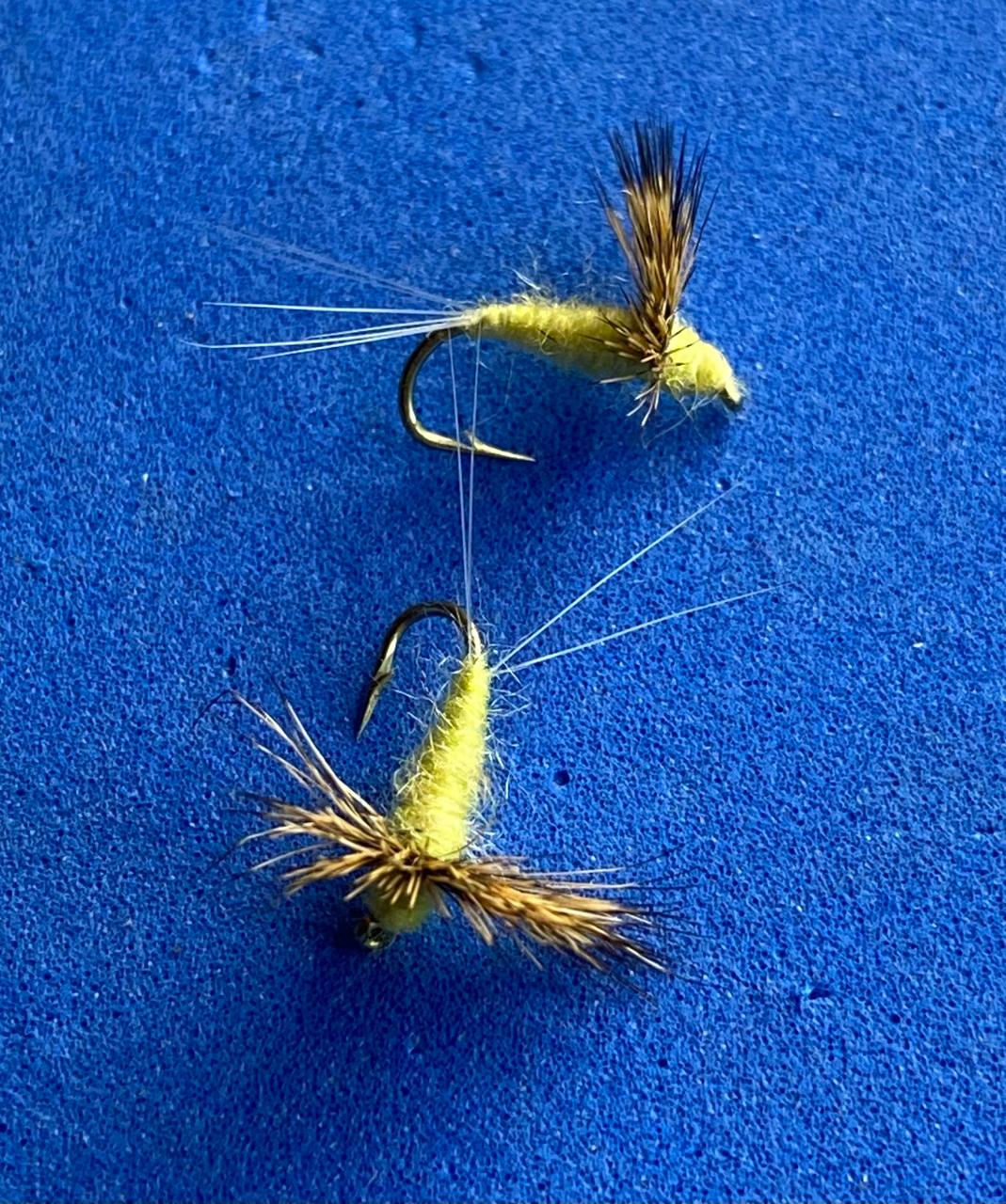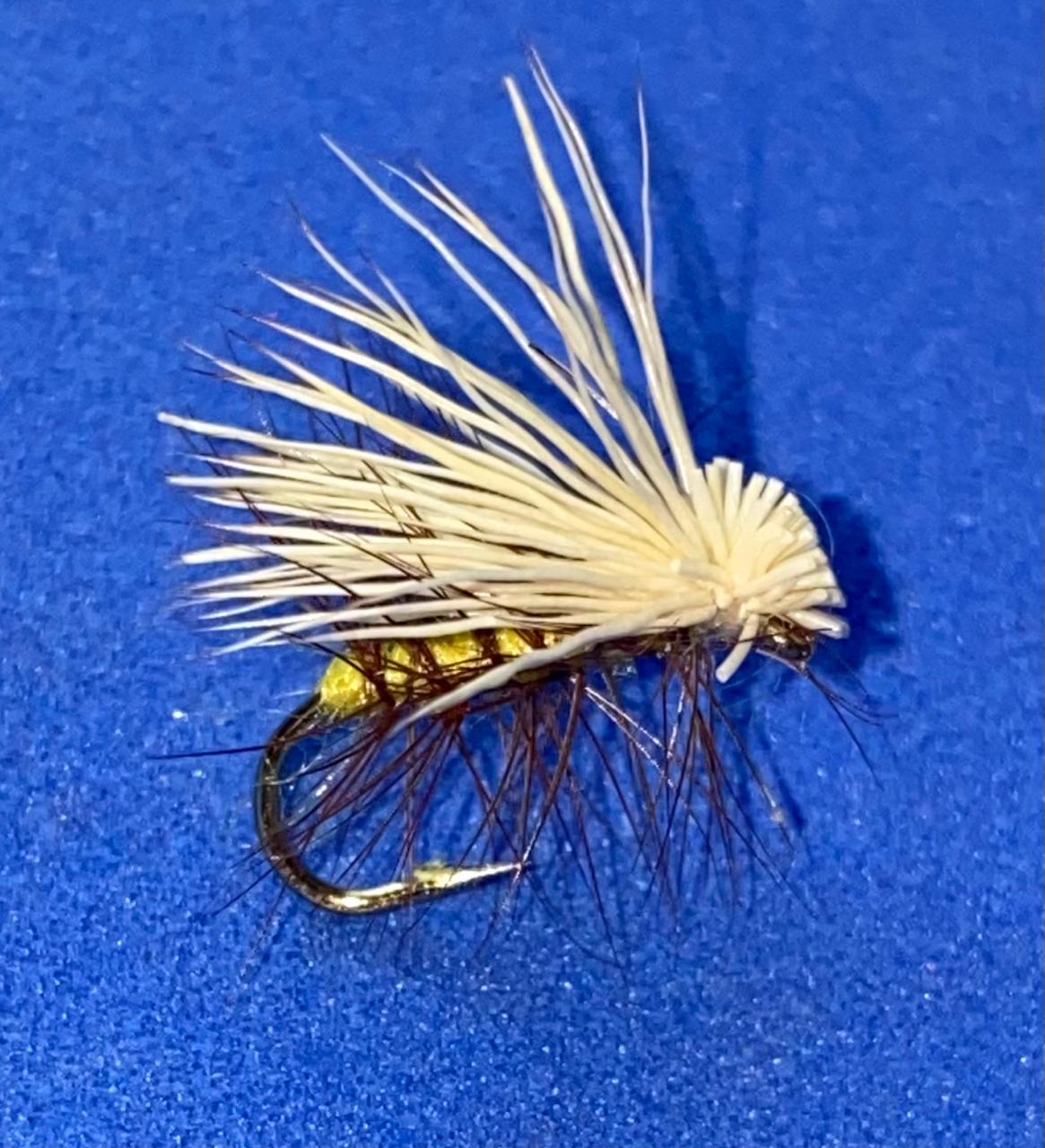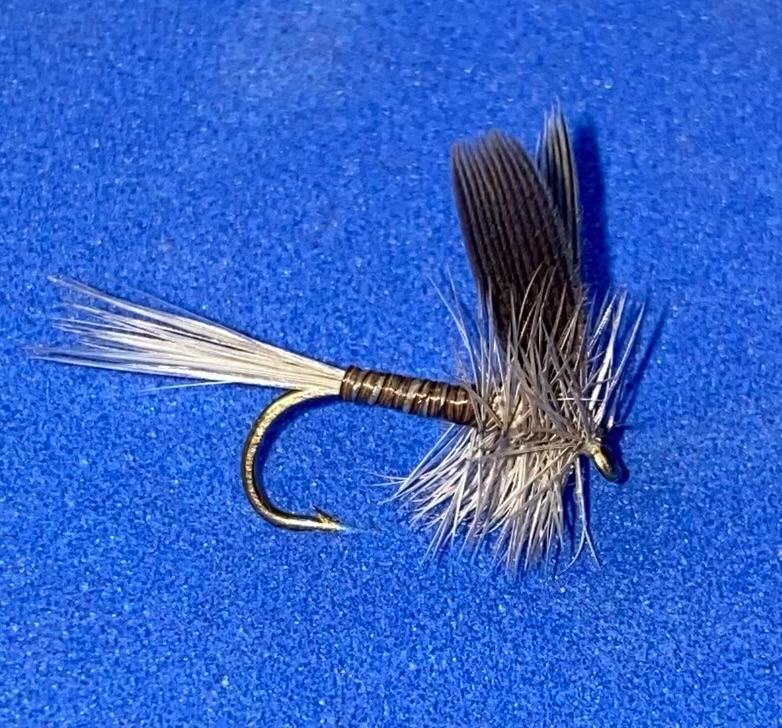
The Blue Quill is a classic dry fly pattern designed to imitate the early season Blue Quill mayflies (Paraleptophlebia) that are common in many trout streams. This fly is particularly effective during the early spring when these mayflies hatch, providing a key food source for trout.
### *Materials:*
– *Hook:* The Blue Quill dry fly is typically tied on a standard dry fly hook, with sizes ranging from #16 to #20, depending on the size of the natural Blue Quill mayflies in your fishing area.
– *Thread:* Olive or dark gray thread is used to match the natural coloration of the mayfly.
– *Tail:* The tail is made from medium or dark dun hackle fibers, which are tied sparsely to represent the slender tails of the mayfly.
– *Body:* The body is constructed from blue-gray or light olive dubbing, giving the fly its characteristic “blue” appearance. Some variations use stripped peacock herl or goose biot for a more segmented look.
– *Wings:* The wings are usually made from medium or dark dun hackle tips or gray poly yarn, tied upright to mimic the natural wing posture of a mayfly.
– *Hackle:* Dun-colored dry fly hackle is wound around the thorax to create the legs and add buoyancy, helping the fly float delicately on the water’s surface.
### *Target Species:*
The Blue Quill dry fly is effective for targeting various species of trout, including:
– *Rainbow Trout*
– *Brown Trout*
– *Brook Trout*
– *Cutthroat Trout*
This pattern is particularly useful during the early spring, from late March through April, when Blue Quill mayflies are hatching. It is ideal for fishing in slow to moderate currents, where trout are often seen rising to these small, delicate mayflies. The Blue Quill’s realistic profile and coloration make it a must-have pattern for springtime trout fishing, especially in streams and rivers where this hatch is prevalent.