5 Hand-Tied Flies Every Angler Should Carry (And When to Use Each One)
Most anglers carry far more flies than they ever fish. A box crammed with random patterns looks reassuring, but on the water it slows decisions down. A smaller selection of proven flies, each with a clear job, will cover most trout days and a good share of warm-water and coastal fishing too.
Below are five hand-tied patterns we would put in any fly box, what each one imitates, and when to tie it on.
1. Pheasant Tail Nymph
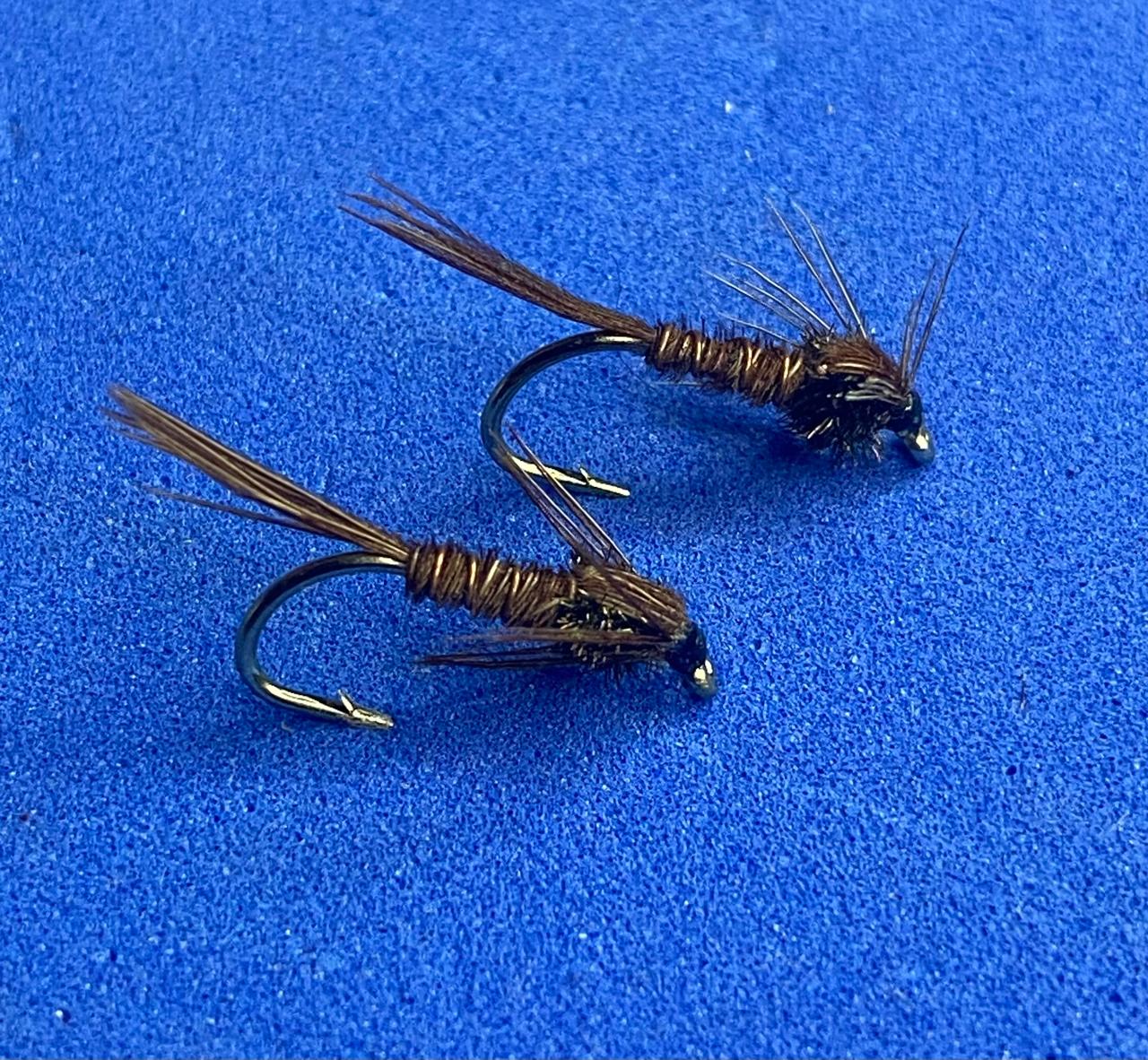
Frank Sawyer, river keeper on England’s Wiltshire Avon, created the Pheasant Tail in the mid-twentieth century using little more than pheasant tail fibres and fine copper wire. It is a slim, buggy imitation of small mayfly nymphs, and that simple outline is why it still works on rivers all over the world.
When to use it: when trout are feeding below the surface and nothing is rising. Fish it dead-drift through riffles and seams, under an indicator or as the dropper beneath a dry fly. Sizes 14 to 18 cover most situations; go smaller on pressured water.
Shop the pattern: Pheasant Tail.
2. Adams Comparadun

The Adams is one of the best-known dry flies ever tied, first dressed in Michigan in the 1920s. Its grey body and mixed hackle suggest a wide range of mayflies without matching any one exactly. The Comparadun style, popularised by Al Caucci and Bob Nastasi in the 1970s, replaces the hackle with a fan of deer hair, so the fly sits low in the surface film with a clear wing silhouette.
When to use it: when you see fish rising to small grey or olive mayflies, especially on flat, slow water where trout get a long look. A hackled Adams floats better in broken water; the Comparadun version is the one to reach for when fish refuse bushier dries.
Shop the pattern: Adams Comparadun.
3. Clouser Minnow
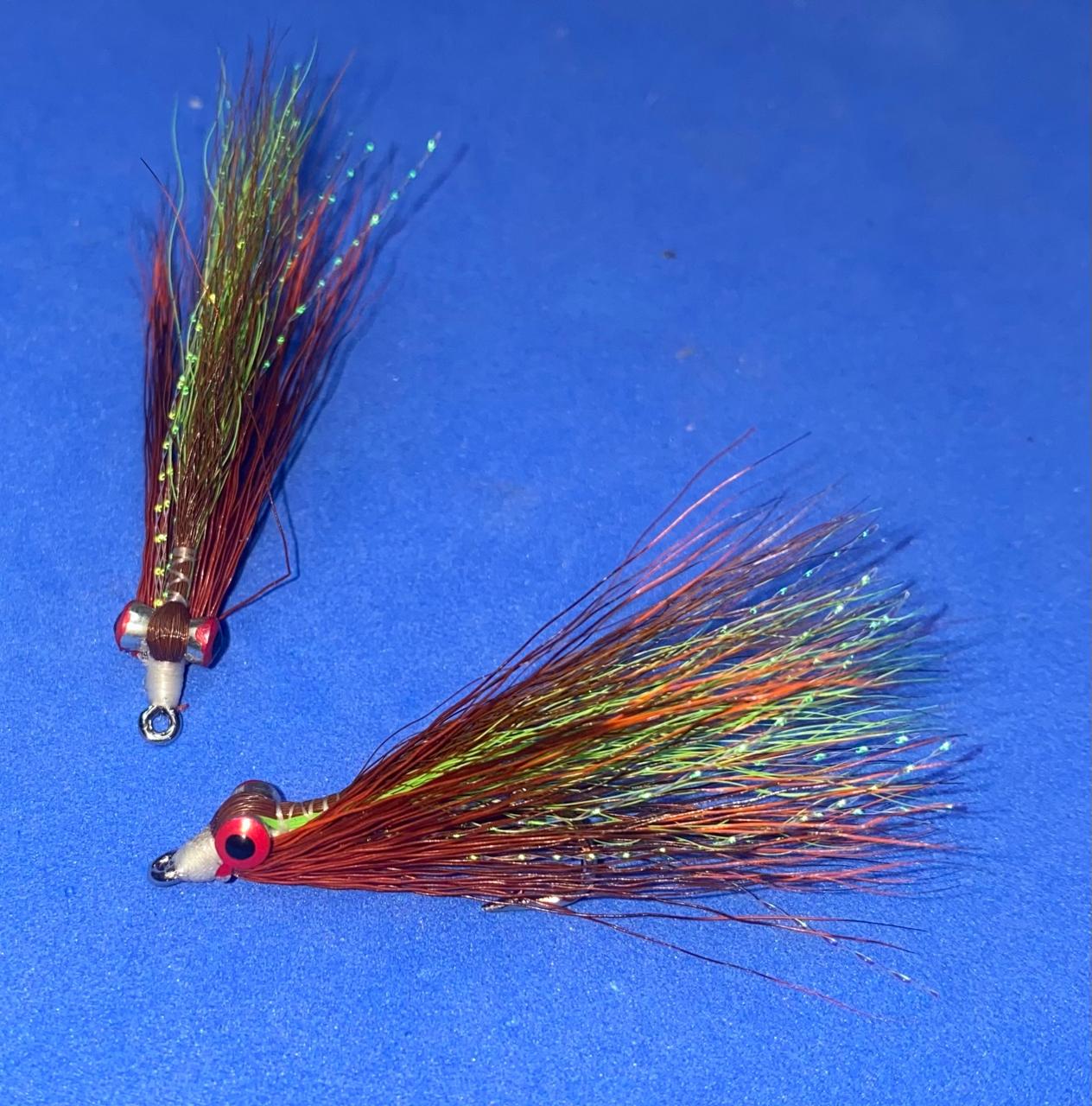
Bob Clouser designed this baitfish pattern for smallmouth bass on Pennsylvania’s Susquehanna River, and Lefty Kreh made it famous around the world. Dumbbell eyes tied on top of the hook make it ride point-up and dive on every pause, which gives it a jigging action and keeps it from snagging the bottom.
When to use it: whenever predatory fish are chasing baitfish: bass, pike, trout in big rivers, and many saltwater species on flats and beaches. Strip it in short, sharp pulls and let it drop between strips. Change colour to match the local baitfish and the water clarity.
Shop the pattern: Clouser Minnow.
4. Chernobyl Ant

The Chernobyl Ant came out of Utah’s Green River in the early 1990s and quickly became a standard summer fly in the American West. Built from layered foam with rubber legs, it floats all day, is easy to see at distance, and can support a nymph hung below it.
When to use it: from mid-summer into autumn, when ants, beetles and grasshoppers are falling onto the water from grassy banks. Cast it tight to the edges and let it land with a plop. It also makes an excellent indicator fly in a dry-dropper rig.
Shop the pattern: Chernobyl Ant, or browse our terrestrial patterns.
5. Zebra Midge
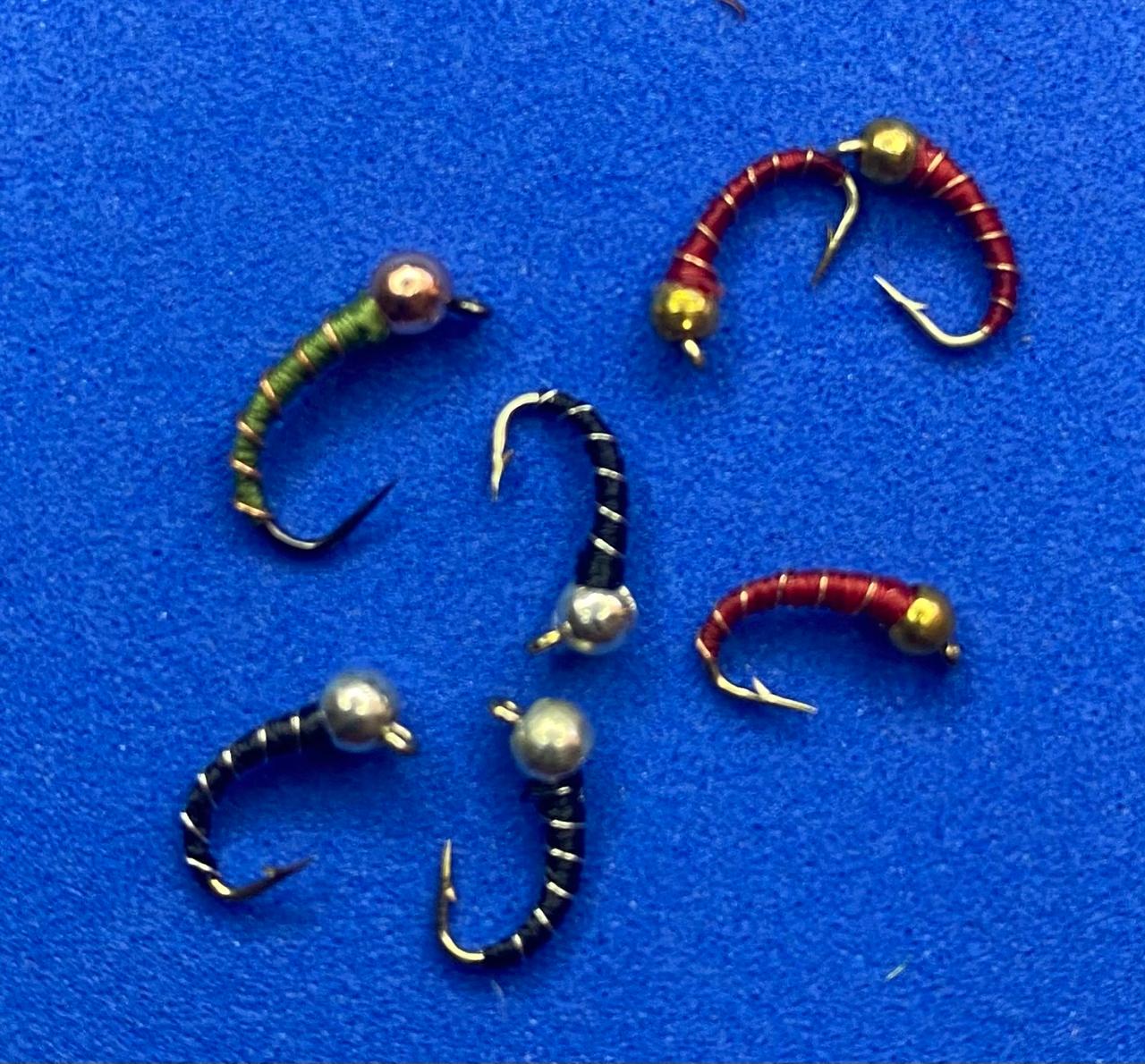
The Zebra Midge is about as simple as a fly gets: a thread body, a fine wire rib and a small bead. It imitates midge (chironomid) pupae, which are present in almost every trout water and are a staple food all year, particularly in tailwaters and lakes.
When to use it: on cold days, in clear, slow water, and whenever trout are feeding selectively on tiny food. Fish it small, sizes 18 to 22, as the bottom fly in a nymph rig or suspended under an indicator in stillwater.
Shop the pattern: Zebra Midge.
Why hand-tied quality matters
The same pattern can fish very differently depending on how it is tied. Correct proportions keep a nymph sinking and drifting naturally, secure heads stop a fly unravelling after a few fish, and well-chosen materials keep dries floating and streamers moving the way they should. Every fly we sell is tied by hand and checked before it is packed.
Build your fly box, or stock your shop
All five patterns are available in our online shop, along with dry flies, nymphs, streamers and saltwater flies. Fly shops, guides and outfitters can contact us about wholesale supply; custom patterns are open for discussion and samples are available on request.